


Real-Time Data Access: GTS and WIS2.0
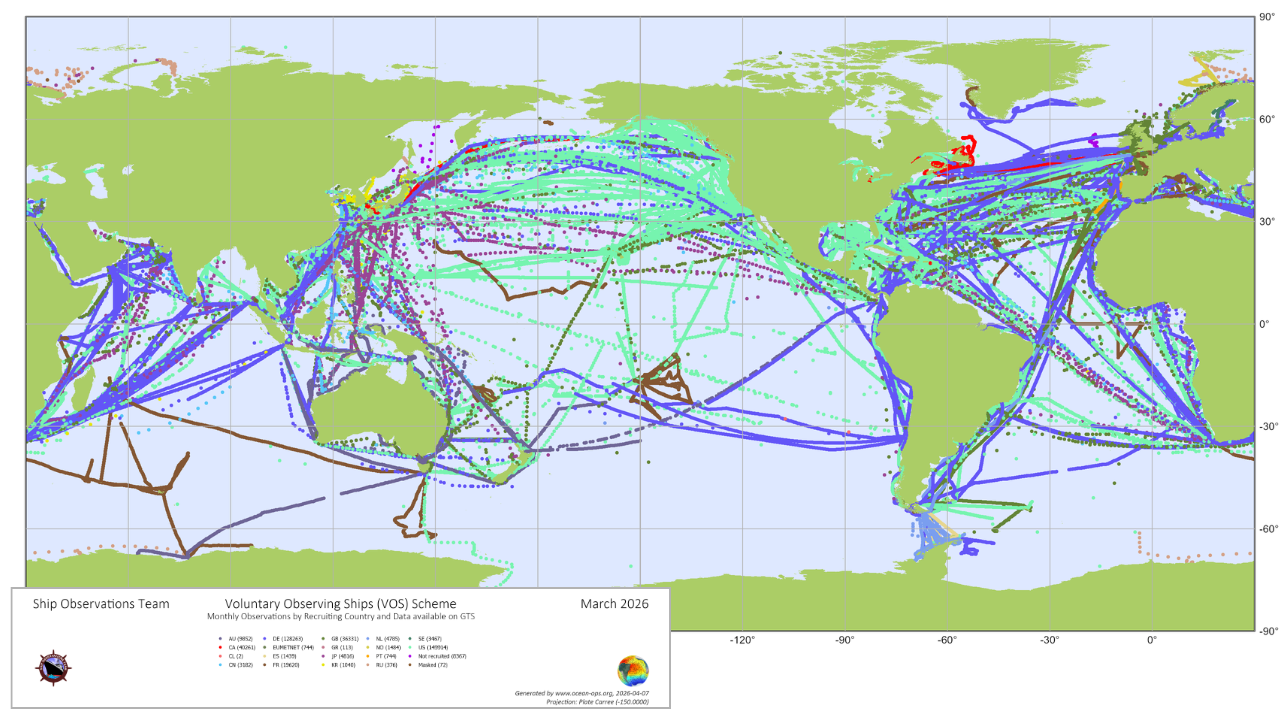
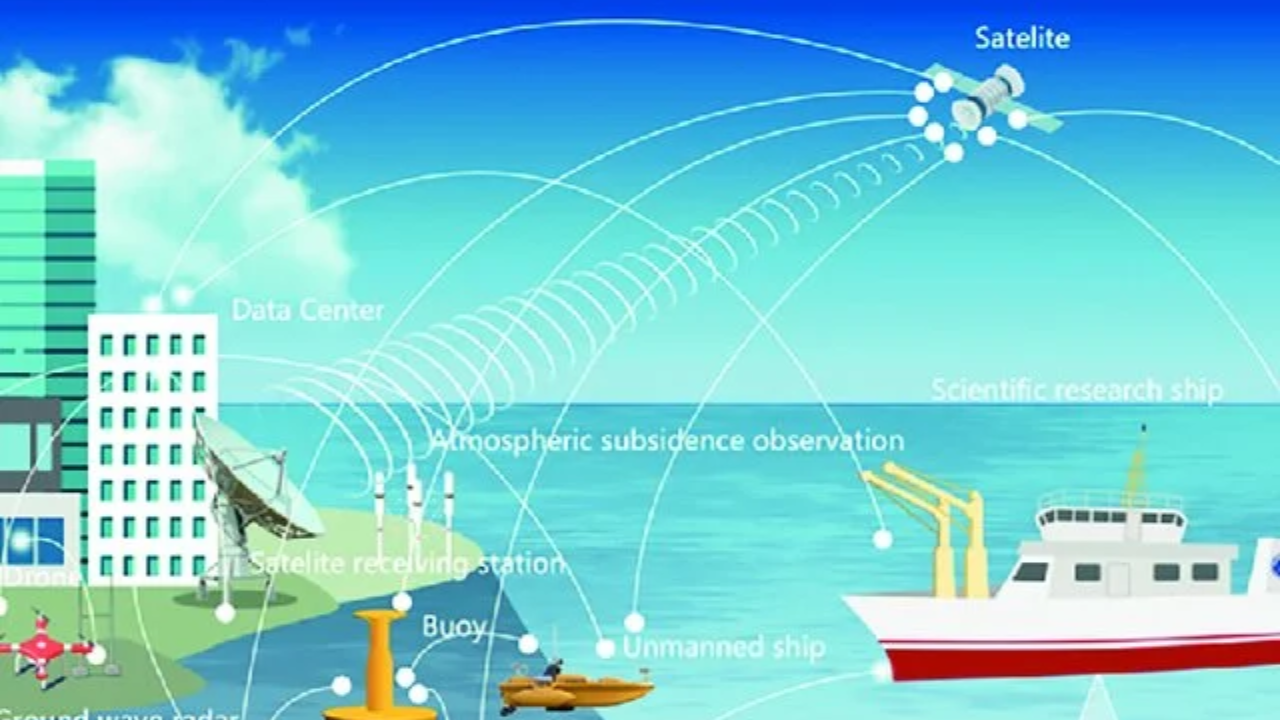
SOT observations are distributed globally in near real-time via the Global Telecommunication System (GTS), or the emerging WIS2.0 infrastructure.
This real-time data includes VOS surface observations, ASAP upper-air soundings, and OceanTraX profiles (where available in real time).
Users typically access this data through the National Meteorological Services, operational forecasting centers or WIS2.0 nodes and data services.
Delayed-mode data — GDACs
Delayed-mode processing allows for quality control procedures that are not possible in real time: comparison with climatological baselines, visual inspection of suspect observations, and correction of instrument calibration offsets identified after the fact. The result is a higher-quality dataset that forms the backbone of long-term climate records.
Ship observations in the Marine Climatological Summaries Scheme (MCSS) extend back to the mid-nineteenth century, making them among the longest continuous in-situ climate records in existence. The International Comprehensive Ocean-Atmosphere Data Set (ICOADS) — the world's primary historical marine climate archive — is built substantially on delayed-mode ship observations submitted through the MCSS.
Global Data Assembly Centres (GDACs) collect, quality control, archive, and distribute delayed-mode ocean and meteorological data. Compared to real-time data, delayed-mode datasets undergo enhanced quality control and include additional metadata optimized for research and climate applications.
Upper ocean thermal data from OceanTraX deployments are archived through the Global Temperature-Salinity Profile Programme (GTSPP) and through the Coriolis GDAC (France) and the US National Centers for Environmental Information (NCEI). ASAP upper-air data are archived through the ECMWF and national meteorological service archives.